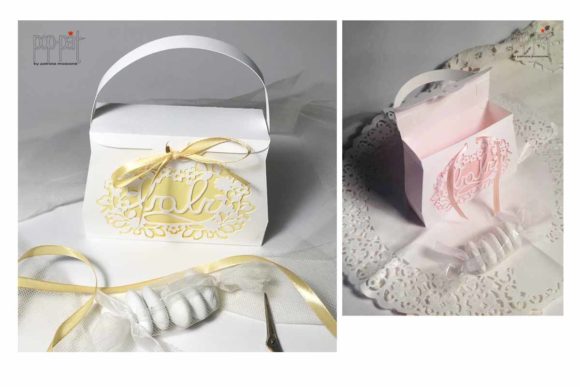
Baby Bag: A 3D SVG for Gift Boxes & Branding
As a graphic designer who spends most of my week juggling brand identities for handmade businesses and preparing print-ready files for boutique clients, I am always skeptical of "cute" assets. Too often, they lack the structural integrity needed for professional commercial design. However, upon reviewing the Baby Bag asset, my initial impression shifted from caution to genuine interest. This isn't just a clipart illustration; it is a functional graphic design asset that bridges the gap between whimsical charm and practical application. The visual mood it creates is warm, inviting, and distinctly tailored for the nursery and baby shower market, yet it possesses enough geometric clarity to work in a modern design context.
Visual Impact and Client Fit
The first thing I noticed when opening the file was the clean line work. In creative design, especially for small business branding, clarity is king. The Baby Bag features a silhouette that is instantly recognizable without being overly cluttered. It represents a style that fits perfectly with current trends in the handmade sector—think soft pastels, organic shapes, and a touch of nostalgia. For a client launching a line of organic baby clothes or a local event planner organizing a gender reveal party, this asset provides an immediate emotional hook. It signals care, preparation, and joy, which are critical elements for audience engagement in this niche.
When considering where this digital product shines, the applications are surprisingly broad. While it is categorized under Gift Boxes and functions beautifully as a 3D SVG for physical crafting, its utility extends far beyond paper folding. I can easily envision using this in logo design for a baby concierge service, where the bag icon serves as a simplified mark on business cards and website headers. For packaging design, it acts as a perfect decorative accent on labels for baby lotions or diaper cakes. The versatility allows it to transition seamlessly from a sticker design on a water bottle to a hero graphic on a Pinterest pin promoting a new blog post about essential baby gear.
Performance in Real-World Design Scenarios
In a recent project for an Etsy seller looking to expand into print-on-demand, I tested how the Baby Bag held up across different mediums. The results were promising. When applied to a t-shirt design, the lines remained crisp even when scaled down for a pocket logo. For sublimation design on mugs and tote bags, the vector paths allowed for easy color manipulation to match specific brand palettes. The fact that it comes as an SVG design means that for Cricut users, the cut lines are precise, reducing material waste—a crucial factor for profit margins in commercial design.
The inclusion of multiple formats (SVG, DXF, PDF) ensures compatibility with Silhouette Studio, Cricut Design Space, and Scan-N-Cut machines. This flexibility is vital for designers who need to deliver files to clients who may have different equipment preferences. Specifically, the instruction to check the notes within the SVG_Cricut folder is a thoughtful touch that demonstrates an understanding of the technical hurdles crafters face. It transforms the asset from a simple image into a reliable tool for creating product mockups and physical prototypes.
Ideal Applications and Strategic Placement
To get the most out of the Baby Bag, strategic placement is key. It works best in large layout areas where it can serve as a focal point, such as the center of a Canva template for a baby shower invitation. It also excels as part of themed collections, perhaps paired with other nursery icons to create a cohesive set of social media graphics for an Instagram campaign. In editorial design, such as a parenting magazine layout or a digital eBook cover, it adds a layer of visual interest without overpowering the text.
However, professional judgment dictates knowing where not to use it. This asset should be used carefully in minimalist branding projects that require ultra-thin lines or in corporate materials where a more serious tone is necessary. In crowded layouts, the details of the bag might get lost, disrupting the visual hierarchy. It is not suitable for low-contrast designs where the outline might blend into the background, compromising readability and recognition.
Technical Review and Designer Notes
Before integrating any asset into a client's brand identity, I run a series of technical checks, and the Baby Bag passed most with flying colors. Here are my practical notes for fellow designers:
- Contrast Testing: Always test the design in black and white first. The Baby Bag maintains its shape well in monochrome, which is essential for faxed documents or single-color screen printing.
- Scalability: Preview the asset at both very small sizes (like a favicon) and large formats (like a banner). The vector nature of the 3D SVG ensures no pixelation, but ensure the internal details don't merge when shrunk.
- Background Compatibility: Check how it looks on both light and dark backgrounds. You may need to create a white stroke or shadow effect if placing it on busy patterns.
- File Inspection: If you are using this for web design, ensure the SVG code is clean. For print, verify the PDF layers are organized correctly.
- Font Pairing: This illustration pairs wonderfully with handwritten fonts for a personal touch or rounded sans-serif fonts for a modern, clean look. Avoid overly ornate serif fonts that might clash with the simplicity of the bag.
- Licensing: As with any design bundle sourced from a creative marketplace, always confirm the commercial license terms before using it for a paid client project or an Etsy product.
Ultimately, the Baby Bag is more than just a cute image; it is a versatile component for building trust and emotional connection in marketing visuals. Whether you are designing a printable design for a wall art set or creating a complex Cricut project for a boutique gift shop, this asset offers the polish and professionalism required for high-quality output. By understanding its strengths and limitations, designers can leverage it to create compelling narratives that resonate with parents and gift-givers alike.